
Initial Situation
After launching a Performance Max campaign with a product feed in Google Merchant Center, the account received a “Misrepresentation” policy violation.
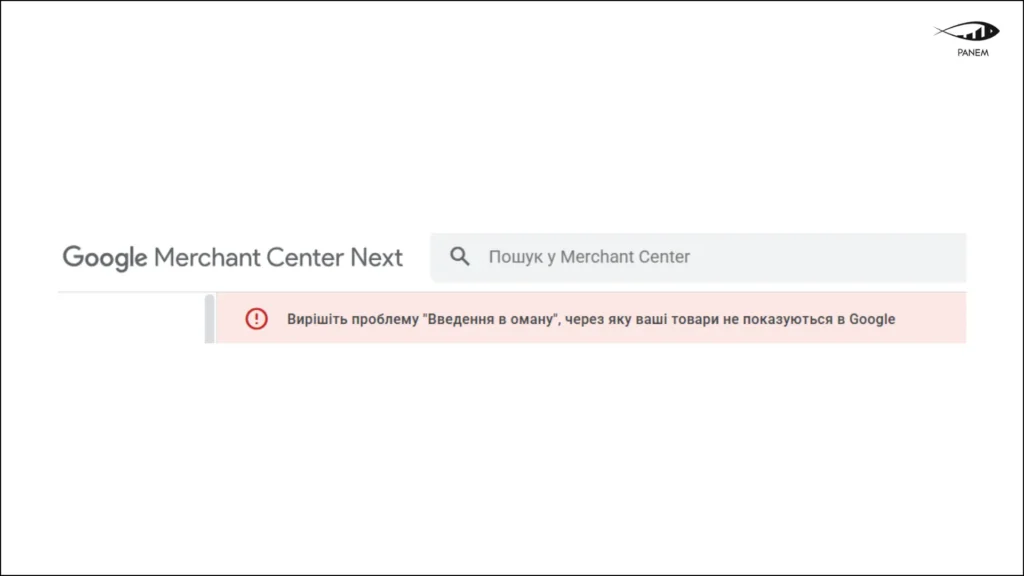
It is important to note that the account was completely new and had no previous suspensions or policy violations in Google Merchant Center.
Despite the issue, the situation was atypical: the Performance Max campaign continued to run, however product listings in Merchant Center received “Limited performance” status. This placed the account in a risky state with a potential full suspension at any moment.
Task
The main objectives were:
- Quickly identify and eliminate the cause of the suspension
- Bring the website into full compliance with Google Merchant Center requirements
- Successfully pass re-review
- Restore product visibility and Google Ads performance
Problem Analysis
After a detailed audit of the Merchant Center and the client’s website, several critical issues were identified that could have triggered Google’s suspension.
The main issue was inconsistency in website information. Several pages were duplicated but contained different content.
Key findings included:
- “Shipping” pages in the header and footer led to different URLs
- “Contacts,” “Payment,” and “Returns & Exchanges” pages existed in multiple versions with different information
- Some service pages lacked complete or detailed information
- Shipping conditions varied across different pages of the website
- Only “Nova Poshta” was listed on the shipping page, while “Ukrposhta” was also available at checkout
- Courier delivery information was incomplete
- The same information was presented differently across various sections of the site
- Some pages lacked transparency from a Google Merchant Center compliance perspective
- Overall site structure appeared inconsistent and unstandardized
As a result, Google’s algorithms could interpret the website as potentially untrustworthy due to:
- Multiple URLs for identical service pages
- Inconsistent information across key policy pages (Contacts, Payment, Delivery, Returns & Exchanges)
- Insufficiently detailed service information
- Mismatched delivery terms between website pages and checkout flow
- Lack of unified structure and messaging across the site
What We Did
A full audit of both the website and Google Merchant Center was conducted.
- Full Website Audit
We reviewed nearly every page of the website, focusing on:
- Content duplication
- Inconsistencies
- Policy compliance issues
- Missing information
- CMS-Level Fixes
After gaining access to the CMS, we updated key pages:
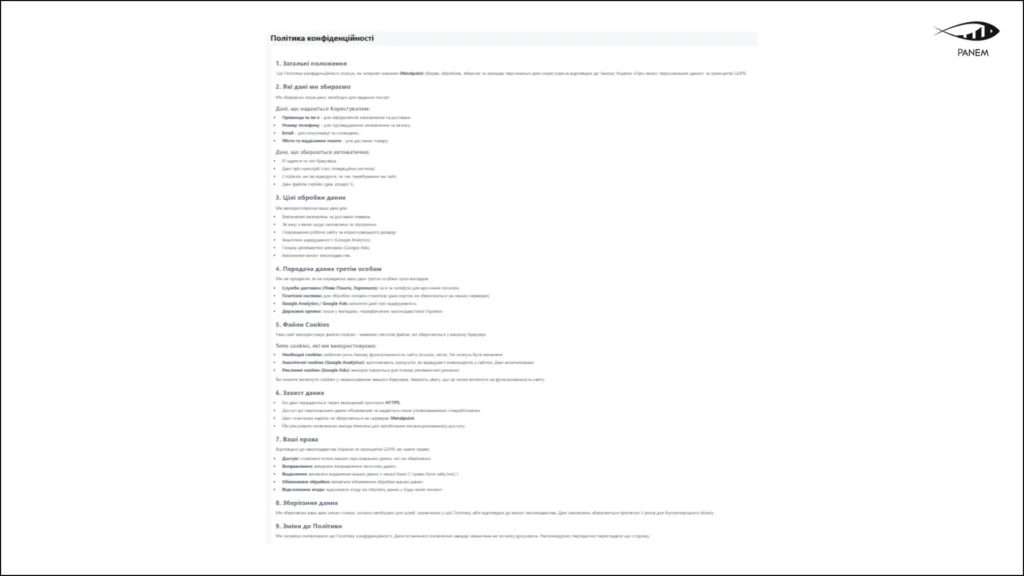
- Privacy Policy

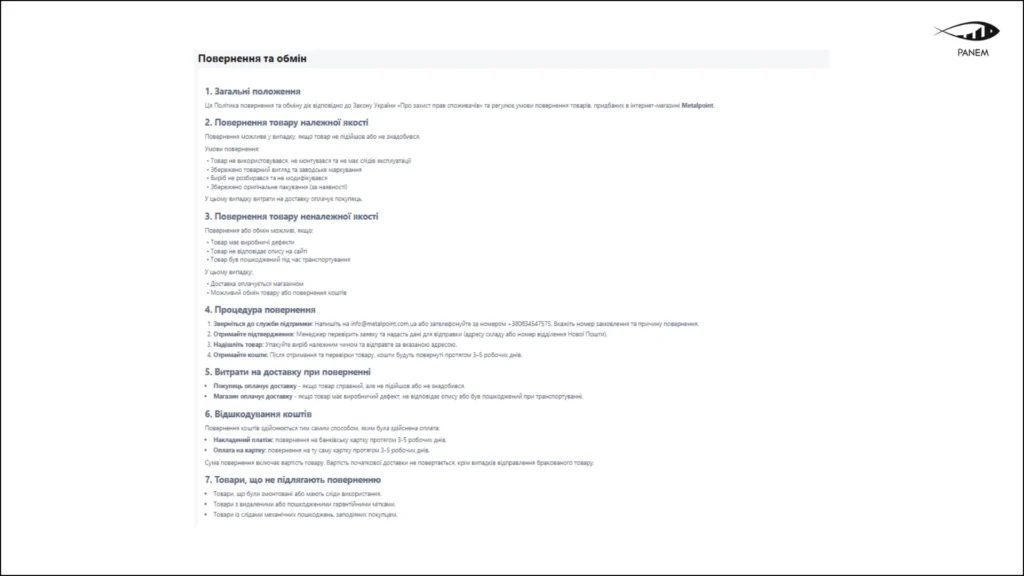
- Returns & Exchanges
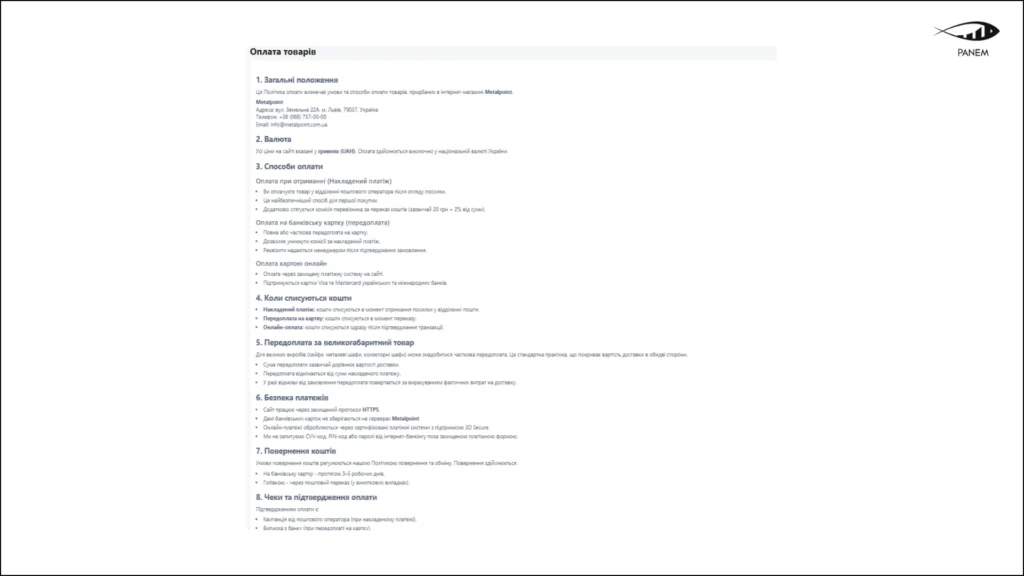
- Payment Policy
- Shipping Policy
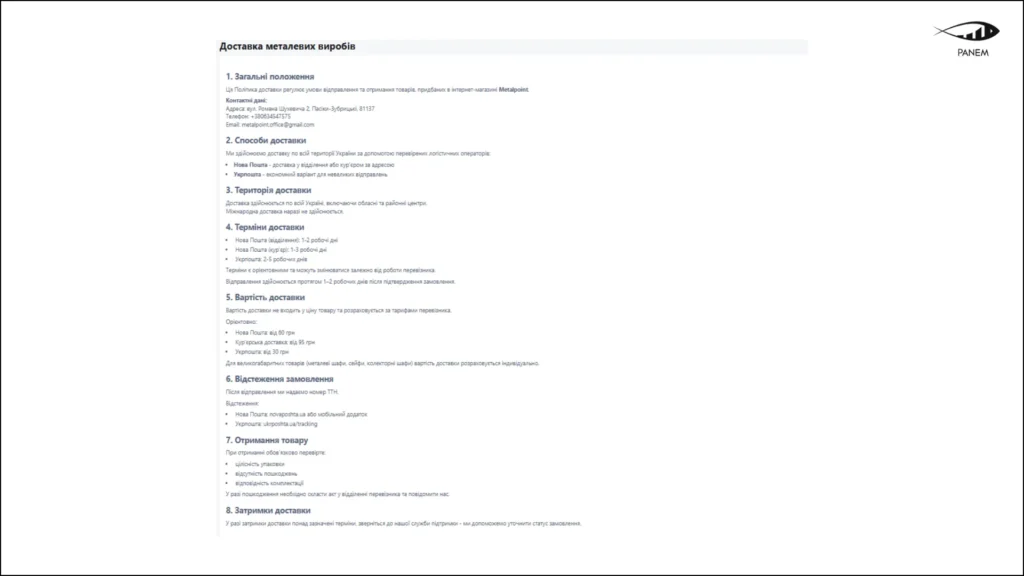
All content was rewritten in a clearer, more structured, and transparent format aligned with Google Merchant Center requirements.
- Shipping Information Alignment
We standardized and synchronized delivery information across the website.
The following delivery methods were correctly implemented:
- Nova Poshta
- Ukrposhta
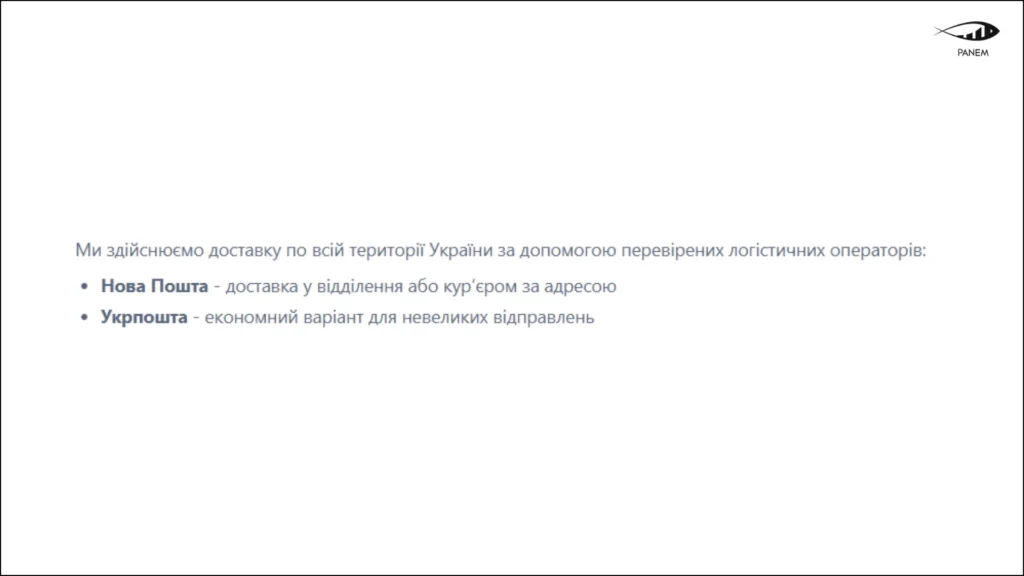
This eliminated discrepancies between the shipping page and the checkout process.
- Duplicate Page Resolution.
Together with the client’s developer, we fixed duplicate page issues.
For example, “Contacts” pages in the header and footer previously led to different URLs with different content. After the fix, all links were unified and fully synchronized.
- Pre-Review Preparation
After implementing all changes, the website was manually rechecked before submitting a reconsideration request to Google Merchant Center.
Results
After submitting the updated website for re-review, the account was reinstated within a few days.
Google successfully removed the suspension, and the Merchant Center account was fully unlocked.
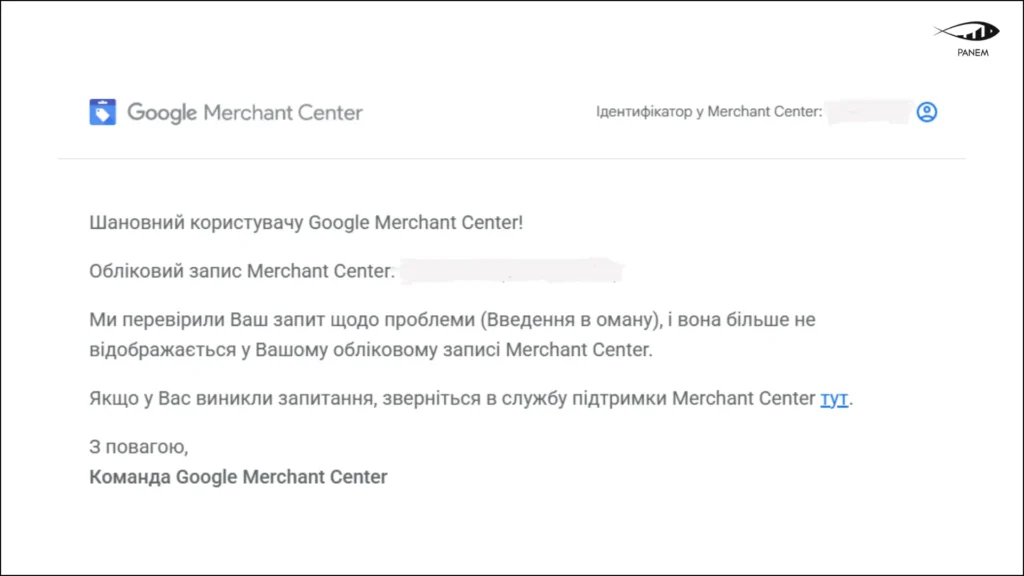
Conclusions
A Google Merchant Center “Misrepresentation” suspension is not always caused by intentional violations or low-quality websites. In this case, the root cause was a combination of inconsistent service information, duplicate pages, and unaligned content—issues that Google’s systems interpreted as a potential risk for users.
Through a comprehensive audit, structural cleanup, policy unification, and synchronization of shipping information, all critical issues were resolved quickly, allowing the account to pass re-review successfully. Within days of submission, the Merchant Center account was fully restored, and advertising campaigns resumed without restrictions.
This case demonstrates the importance of maintaining full transparency and consistency across eCommerce websites, especially for businesses using Google Shopping and Performance Max. Even minor inconsistencies between pages can lead to serious Google restrictions and lost revenue opportunities.
OTHER CASE STUDIES