Initial Data:
A SaaS platform for creating and centrally managing corporate email signatures. It allows teams to use email signatures as a marketing channel — with campaign banners, click analytics, and integrations with Google Workspace and Microsoft 365.
Key Challenges:
Visibility in AI search: In 2025, the SaaS market for email signatures changed significantly. Users started discovering products not only through Google’s top 10 results, but also through answers from ChatGPT, Google AI Overview, AI Mode, Gemini, Perplexity, Copilot, and Grok.
NewoldStamp had strong classic SEO positions, but was almost absent from generative AI answers, while competitors like HubSpot, WiseStamp and Canva were actively increasing their visibility and citations in LLMs.
- The brand did not appear in AI Overview for key commercial search queries.
- NewoldStamp had low visibility in ChatGPT, Gemini, Perplexity, and newer AI platforms such as AI Mode, Copilot, and Grok.
- The content had a classic SEO structure, but was not optimized for AI search (answer-first, definitions, structuring, comparison tables);
- Brand entity signals were weak — LLMs did not consistently recognize NewoldStamp as a separate and relevant entity.
- There was a risk of zero-click scenarios: AI systems could fully answer user queries without sending users to the website. If the brand was not directly present in the AI response, it lost visibility at the early stage of choosing a solution, comparing options, etc.
Goals:
- Increase the number of brand citations across all key AI systems: ChatGPT, AI Overview, AI Mode, Gemini, Perplexity, Copilot, Grok.
- Appear in buyer-intent AI answers alongside HubSpot, WiseStamp, Canva, and Exclaimer.
- Strengthen brand authority and maintain SEO rankings as the foundation for AI-driven visibility.
- Track AI visibility as a standalone KPI in monthly reports.
Initial Analysis:
Target audience: marketers, IT administrators, HR and Sales teams of medium and large companies that are looking for a centralized solution to manage email signatures for all employees. Key segments include Marketing Managers, IT Admins, HR Directors, Sales Operations, and Office Managers in companies across IT, fintech, consulting, and professional services.
Competitors: During the research, the main competitors in the niche were identified: HubSpot Email Signature Generator, WiseStamp, Canva, CodeTwo, MySignature, Letsignit, SyncSignature, and Signature 365. The market is polarized between free generators such as HubSpot, MySignature, and Canva; personal branding solutions such as WiseStamp; and enterprise signature management platforms such as Exclaimer, CodeTwo, and Letsignit — all of which directly compete with NewoldStamp in the B2B segment.
Therefore, the GEO/SEO promotion strategy was focused on:
- AI-adapted content that LLM systems can easily read and use in their answers;
- coverage of commercial-intent queries through comparison content and curated lists of the best solutions;
- stronger brand signals as mentions on sources trusted by AI systems;
- traditional SEO as the foundation that provides AI systems with high-quality and structured data.
Main tools:
- Ahrefs: AI Citations and Brand Radar modules for analyzing AI visibility and backlinks;
- Semrush AI Visibility: monitoring mentions, citations, and cited pages across LLMs;
- Google Search Console: analysis of clicks, impressions, and rankings;
- Bing Webmaster Tools and IndexNow: indexing for ChatGPT, which relies on Bing;
- custom prompt-test sessions in ChatGPT, Gemini, Perplexity, Copilot, and Grok;
- monitoring Google AI Overview and AI Mode for a priority list of queries;
- Schema.org validators for FAQ, Article, WebApplication, Service, and Organization schema.
Promotion Stages
Stage I
At the first stage, we conducted a comprehensive audit of the brand’s starting position in AI search, LLM systems, and the competitive landscape.
What was done:
- Checked the brand’s basic visibility in AI using 50+ commercial-intent prompts.
- Analyzed direct and adjacent competitors in the niche of SaaS solutions for email signatures.
- Evaluated the product’s functional capabilities and its current market positioning.
- Analyzed the visibility of informational content in LLMs: AI Overview, ChatGPT, Gemini, Perplexity, Copilot, and Grok.
- Conducted an additional technical audit of the website as a baseline requirement for AI visibility: checked content accessibility for AI bots, page crawlability, technical limitations for crawlers, and how AI systems can read and interpret the site’s content.
The main focus was to understand whether LLM systems can actually see and correctly read the website content, which types of queries and platforms the brand does not appear in, and which sources AI systems most often cite in answers about email signatures.
This allowed us to build a GEO strategy focused not on abstract “AI presence,” but on specific gaps in brand visibility: by query type, platform, citation sources, and contexts in which users are looking for a solution.
Stage II
At the second stage, the focus shifted to improving existing content and creating new high-quality pages.
1. Query Fan-Out analysis. A Query Fan-Out analysis was conducted to understand how AI systems expand user queries about email signatures. Based on this analysis:
- created additional informational query clusters to fully cover the content around the main query and improve the overall relevance of the domain;
- identified content gaps compared to competitors;
- expanded semantic core for articles and landing pages..
As a result, this helped create content that more accurately matches real user search scenarios and the format of answers in LLM systems.
2. Technical briefs for commercial landing pages. Technical briefs were prepared for optimizing existing solution pages and creating new ones, segmented by teams, industries, professions, and other relevant categories.
3. Blog audit.
3.1. Content segmentation. We divided the blog into three categories: lead-generating articles, general informational articles, and industry news.
3.2. Optimization of problematic content. The first priority was articles with duplicate content, keyword cannibalization, and outdated information.
3.3. Removal and consolidation of ineffective content. Some articles were not sufficiently relevant to the niche, which diluted the domain’s topical relevance and weakened the overall quality of the site’s content profile.
To fix this, we conducted a content review: low-quality, outdated, or irrelevant materials were removed, while articles with partial value were merged with other relevant pages.
3.4. Optimization of lead-generating articles. We updated and optimized articles that had the potential to generate leads, which helped improve their search rankings and increase visibility in AI Overview.
4. Optimization for LLMs and AI Overview.
We adapted the content structure to make it easier for AI systems to read:
- added TL;DR blocks, direct answers after headings, short paragraphs, category definitions, comparison HTML tables, FAQs with Schema markup, up-to-date time signals, links to authoritative sources, expert quotes, alternative viewpoints, and coverage of entire clusters of related queries.
- expanded the site’s semantic coverage with content targeting long-tail, niche, and highly relevant queries. This type of content better matches the logic of LLM search, where users often ask more specific questions: they are not just looking for the “best product,” but for a solution for a specific scenario, task, audience, budget, or comparison with competitors.
Stage ІІІ
- Internal linking
Additionally, we reviewed the approach to internal linking. Previously, the main focus was on simply strengthening commercial-intent pages through internal links. In the updated strategy, the focus shifted to contextual internal linking.
This means links were added not mechanically — not just in blocks or lists — but within relevant content, where they logically complement the topic and match the user’s intent.
- Link-building strategy change
We revised the link-building approach: we moved from traditional backlink acquisition to a strategy focused on strengthening brand presence in search results, media, and content that may potentially be used by LLM systems in their answers.
The previous approach was effective for traditional SEO, but it did not fully cover new search scenarios, where not only links matter, but also the frequency, context, and quality of brand mentions.
Updated strategy
We shifted the focus from simply building backlinks to systematically promoting brand mentions. Instead of point-by-point linkbuilding, we moved on to building a broader brand presence. This made it possible to work not only with classic SEO signals, but also with factors of trust, recognition, and brand presence in content, which influence user decisions and can be taken into account by AI search.
What was done
To strengthen the brand’s presence, we implemented several workstreams:
- Build brand presence in relevant content that is often read, shared, and cited.
- Created our own PR publications to increase the number of high-quality brand mentions in the information space.
- Initiated brand inclusion in ranking materials, especially listicle-articles from the top search results.
- Additionally, manually processed “best,” “top,” + main keyword query formats to ensure brand presence in materials that users and LLMs may use when choosing a solution.
- Expanded the focus from links to mentions, taking into account not only the SEO metrics of the donor site, but also the authority of the context, page visibility, and its potential to influence brand perception.
- In the anchor strategy, the priority also shifted toward the brand: the brand became the main element of both the link and mention profile:
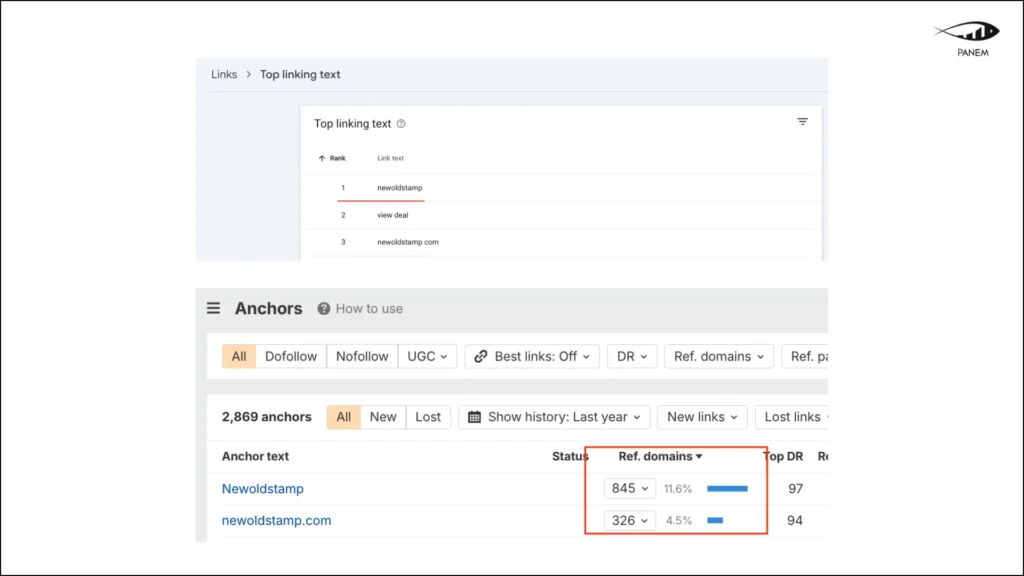
- Working with reviews and brand trust
At this stage, we also expanded our work with reputational signals, particularly reviews. We analyzed how the brand is represented on external platforms, company profiles, directories, review pages, and in search results for branded and commercial queries.
The main goal of this work was to strengthen trust in the company from both users and search engines. To achieve this, we focused not only on the number of reviews, but also on their quality, relevance, natural wording, and alignment with real user experience.
We identified platforms where it was worth updating or expanding company information, strengthening the brand’s presence, and encouraging new reviews. We also placed a separate emphasis on making positive customer experiences visible not only on the website, but also across the external information space.
This approach helps build an additional layer of trust around the brand, improves how the company is perceived in search results, and supports the SEO strategy through reputational and behavioral signals.
Results:
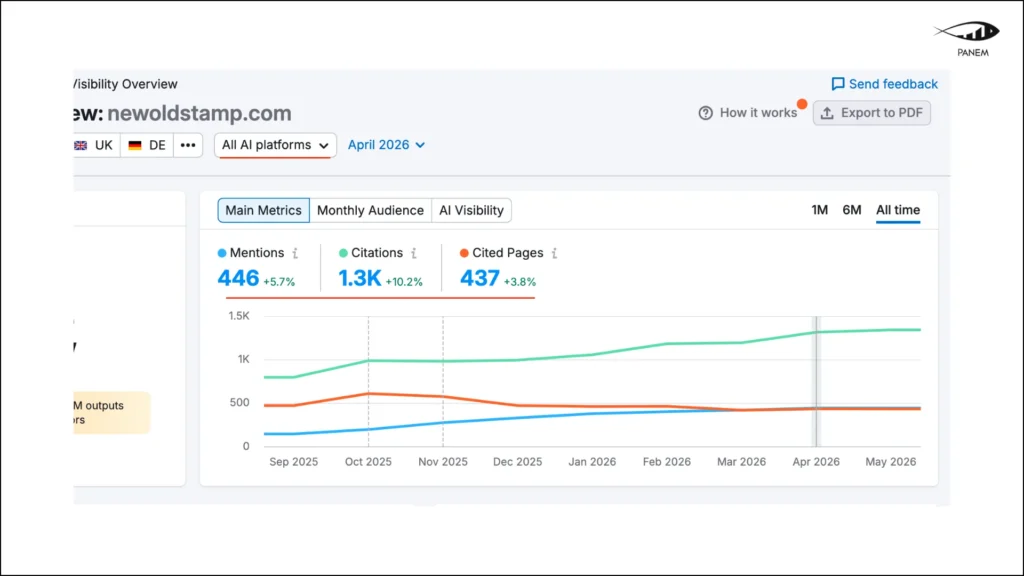
1.Visibility in LLM: 1.3K citations per month (+10.2%)
After finalizing the content, the site began to appear more actively in AI search and LLM system responses.
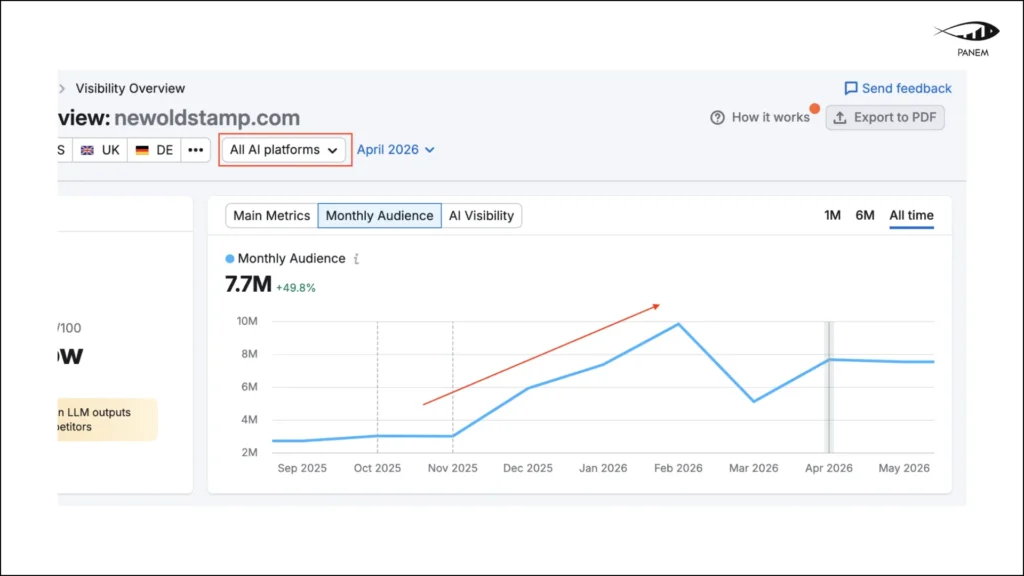
AI audience: 7.7M per month (+49.8%)
This is the aggregate audience of LLM answers that cite NewoldStamp as a source or brand mentioned
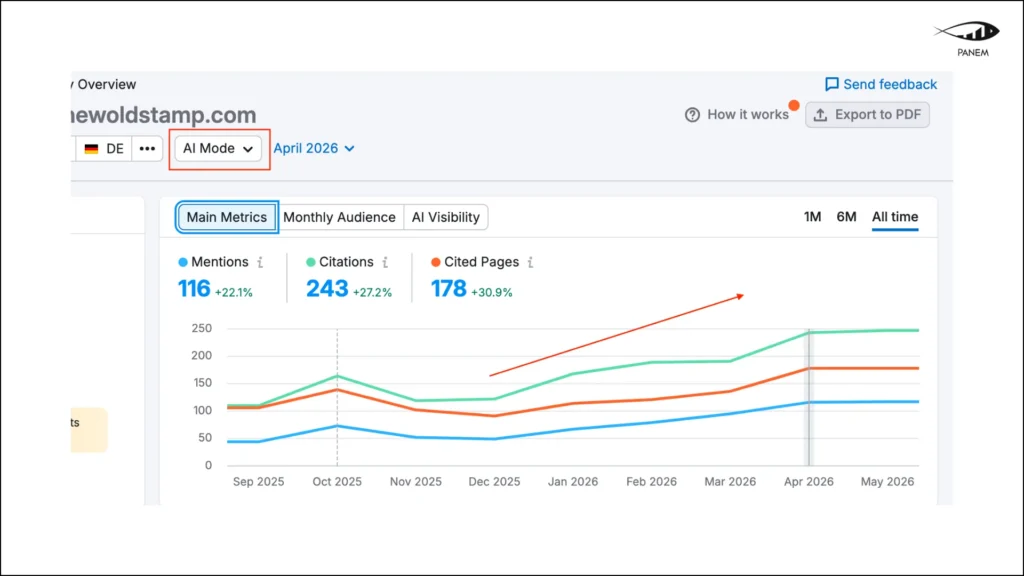
Google AI Mode: +27.2% citations and +30.9% cited pages
AI Mode is Google’s newest interface for conversion queries and the fastest growing AI channel in the case.
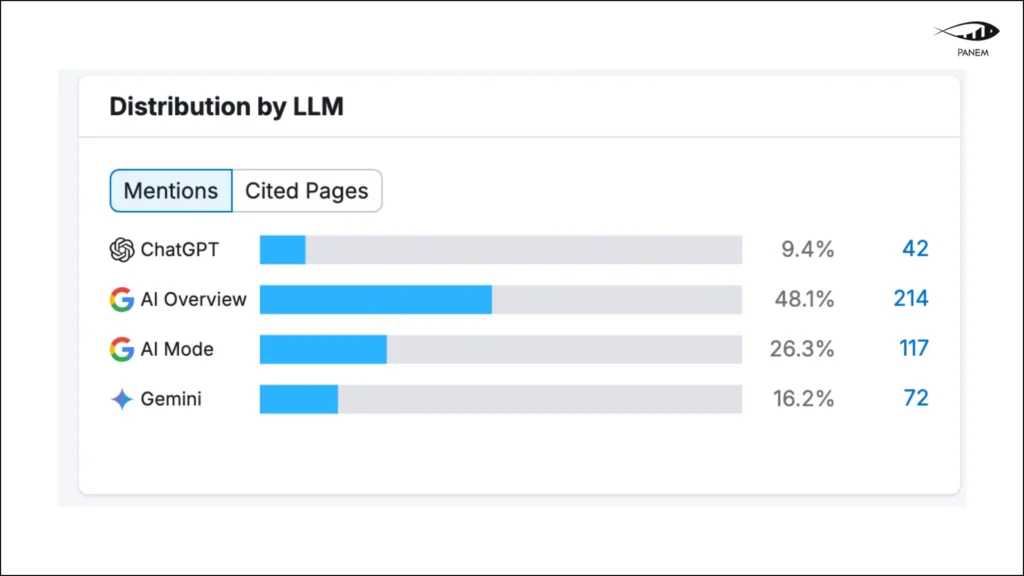
The distribution of mentions by platform shows where the brand is currently receiving the most visibility and where it should scale efforts in the coming quarters:
2. Real examples of NewoldStamp quotes in AI responses:
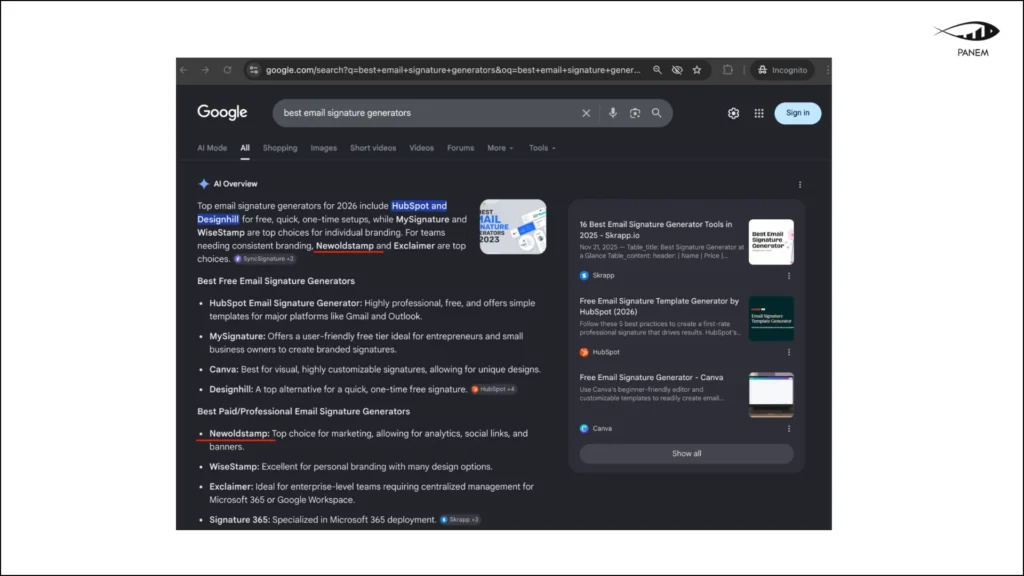
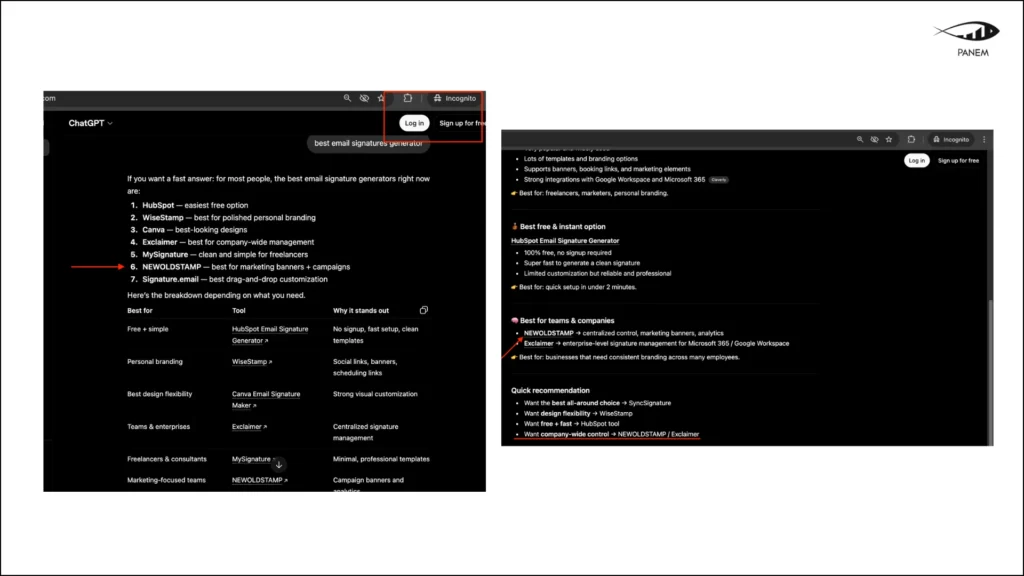
| To ensure maximum objectivity of the results, all checks were performed in incognito mode without logging into an account, which helped minimize the impact of personalized search results. |
- Citations appeared in AI-overview under the main query with commercial intent:

- Also started being quoted in Chat GPT:
3. Improving classic SEO as a foundation for AI visibility: +50% impressions and +16% traffic
AI citations directly correlate with the quality of classic SEO visibility — model systems mostly cite pages from Google’s top 15. Therefore, it is critical that traditional metrics have grown in parallel with GEO work.
GSC:
(comparison: last 6 months vs previous 6 months)
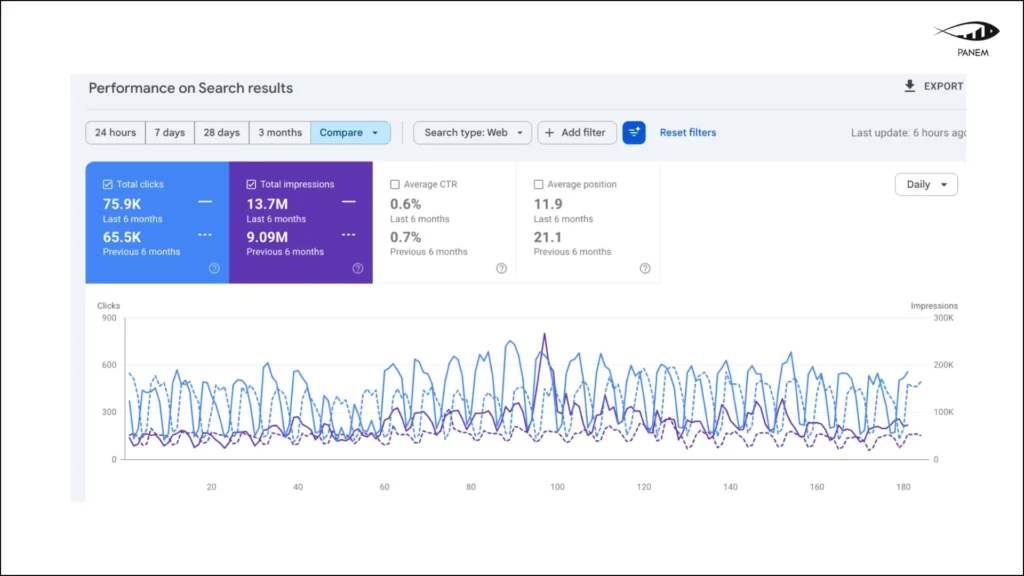
Average position: 21.1 → 11.9 = 43.6% improvement
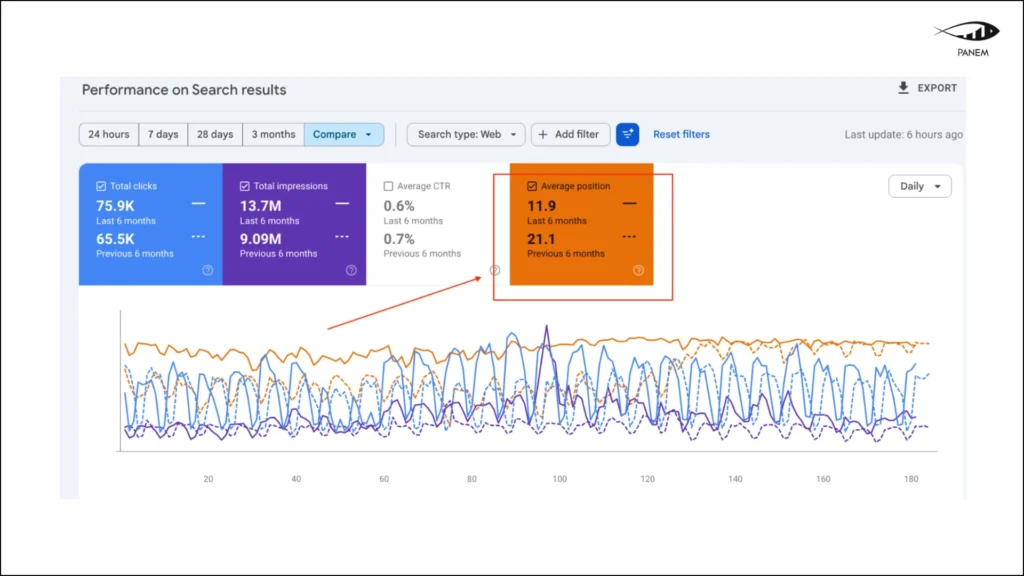
Position gain: +79 new keys in TOP 3:
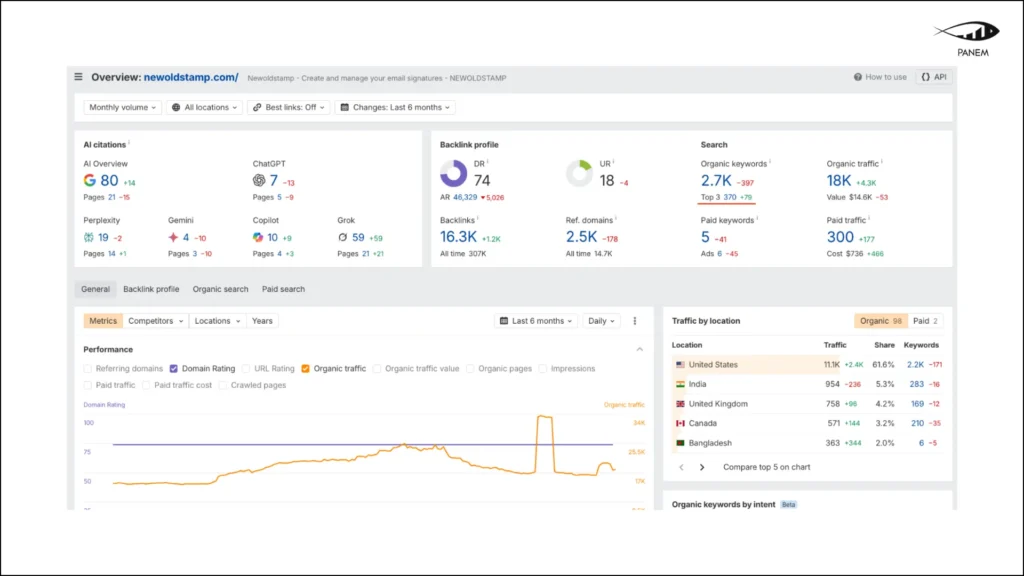
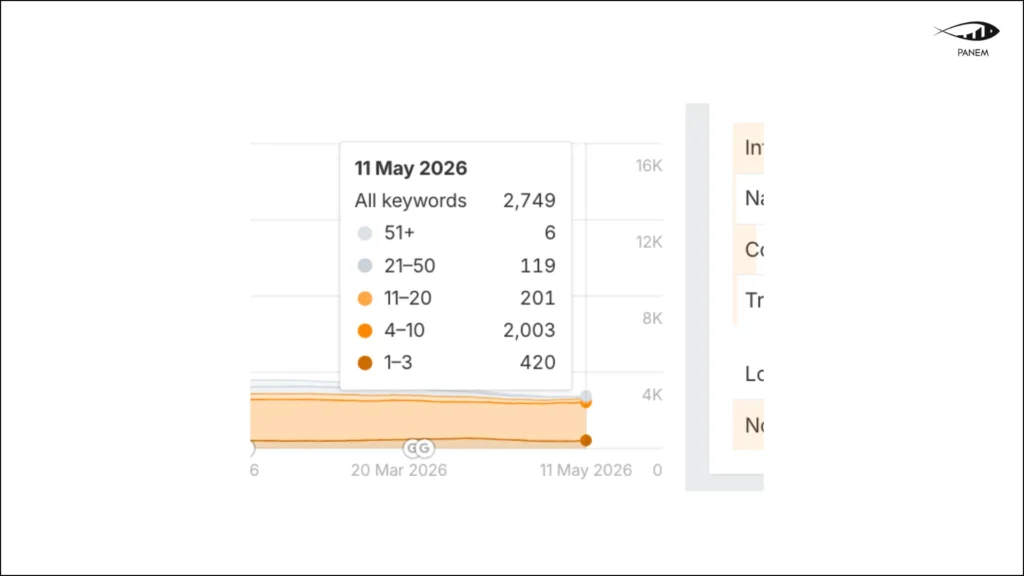
- 15.3% of all keywords rank in the TOP-3
- 88% of keywords are in the TOP-10
Conclusions:
The GEO/SEO strategy made it possible to transform the brand’s traditional SEO visibility into a full-scale presence in AI-generated answers. By optimizing content for LLMs, strengthening brand signals, working with comparison materials, mentions, PR publications, and reputation platforms, the brand began appearing more frequently in ChatGPT, Google AI Overview, AI Mode, Gemini, Perplexity, Copilot, and Grok.
Most importantly, the work was focused not only on traffic, but also on brand presence at the solution-selection stage, where AI-generated answers can influence a user’s decision even before they visit the website. As a result, NewoldStamp now consistently appears in LLM answers alongside HubSpot, WiseStamp, Canva, and Exclaimer. The brand reached 1.3K AI citations per month, an AI audience of 7.7M, a 27.2% increase in citations in Google AI Mode, and a 30.9% increase in cited pages.
At the same time, the traditional SEO foundation also strengthened: impressions grew by 50%, traffic increased by 16%, and the average position improved from 21.1 to 11.9. This confirms that combining technical SEO, high-quality content, structured data, and systematic work on brand presence is an effective foundation for increasing visibility both in search and in AI environments.
The most effective tactics were:
- AI-friendly restructuring of commercial pages: Quick Overview, comparison tables, and FAQ sections;
- comparison content and best-of roundups, which LLMs most often use as citation sources;
- digital PR and listings on AI-trusted resources to strengthen entity signals.
OTHER CASE STUDIES