Project Goals & Challenges
Goals
- Increase non-branded organic traffic
- Build authority via blog content
- Improve visibility for key features & automations
Challenges
- Limited budget at launch
- Technical limitations included missing schema markup, indexing delays, and ineffective internal linking.
- Strong competitors dominating SERPs
Why This Case Matters
What makes this SEO case especially impactful is the competitive context. Sembly operates in the saturated AI notetaker space, alongside well-funded competitors. Despite their higher domain authority and content maturity, Sembly achieved multi-fold growth and began ranking alongside them with a lean, content-first SEO strategy — without relying on brand searches or paid traffic. This demonstrates that strategic, scalable SEO can close the gap with major players, even in high-intent, product-led verticals.
Strategy & Execution
- Technical SEO Audit
- Identified crawl issues, redirect conflicts, and indexing problems on blog pages
- Implemented structured data, corrected internal redirects, and resolved non-indexed URLs
- Competitor & Blog Audit
- Deep analysis of direct competitors’ keyword strategies and content types
- Audit of existing blog: identified weak or outdated articles for optimization
- Content Strategy
- Refined old blog posts by aligning with search intent
- Developed new content plan based on keyword clusters, client input, and competitor gaps
- To stay ahead of evolving SERP features, we designed content with AI Overviews (AIOs) in mind — structuring posts around questions, definitions, and task-oriented queries. As a result, 20+ blog articles have already been featured in Google’s AI Overview, driving high-visibility impressions from top-of-funnel queries.
- Internal Linking Improvements
- Added dynamic related-post blocks and manual links
- Connected new and old articles, improving crawl depth and engagement
- Link Building
- Phase 1: Crowd marketing on blog pages
- Phase 2: Targeted PR placements, SaaS blog outreach, and strategic link exchanges
- Feature Page Optimization
- Automated SEO improvements to automation pages (AI-generated content blocks)
- Created “Departments” pages to build trust for specific B2B personas
Results
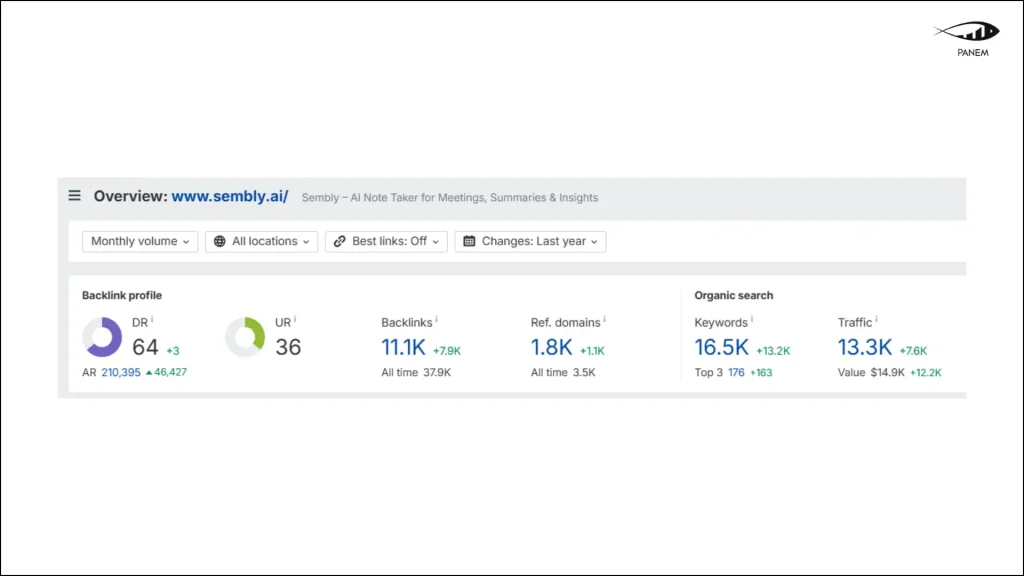
Ahrefs Overview (June 2025)
- Keywords: +13.2K (Total 16.5K)
- Monthly Organic Traffic: +7.6K (Total 13.3K)
- Referring Domains: +1.1K (Now 1.8K)
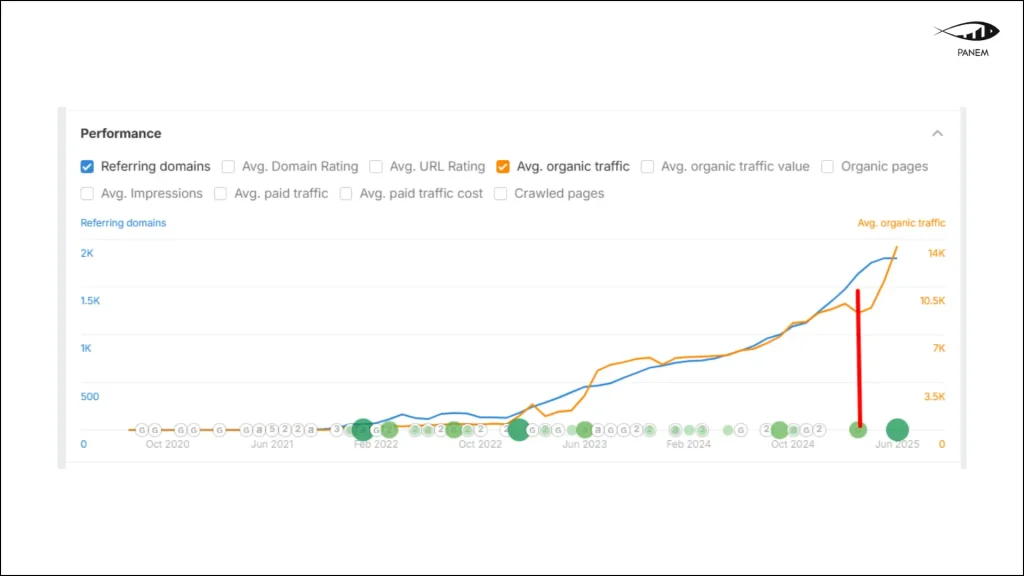
Growth Trend
- Strong correlation between link growth and traffic increase since May 2024
- A sharp increase after the latest Google update.
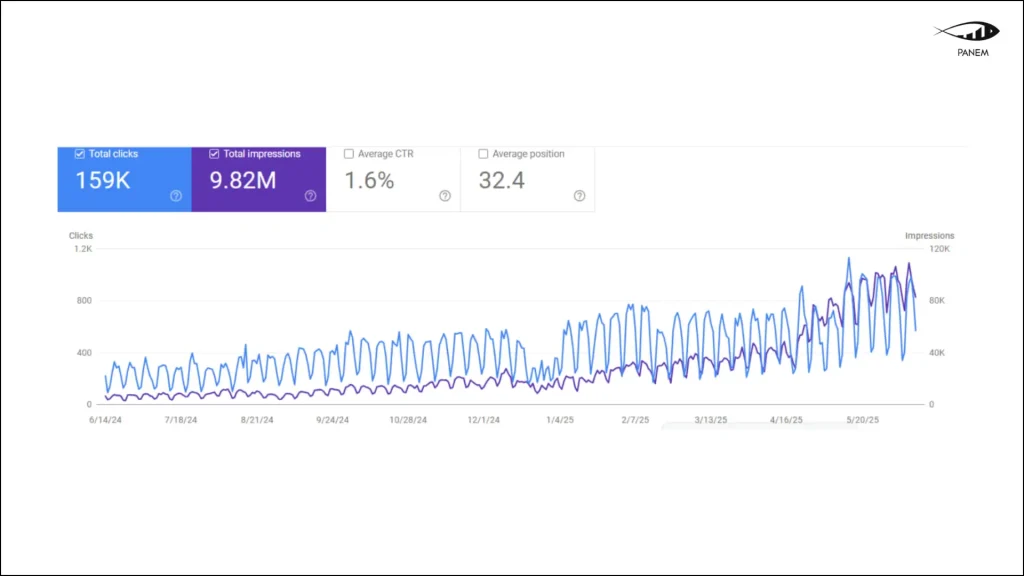
GSC Clicks & Impressions
- Total Clicks: 159K
- Total Impressions: 9.8M
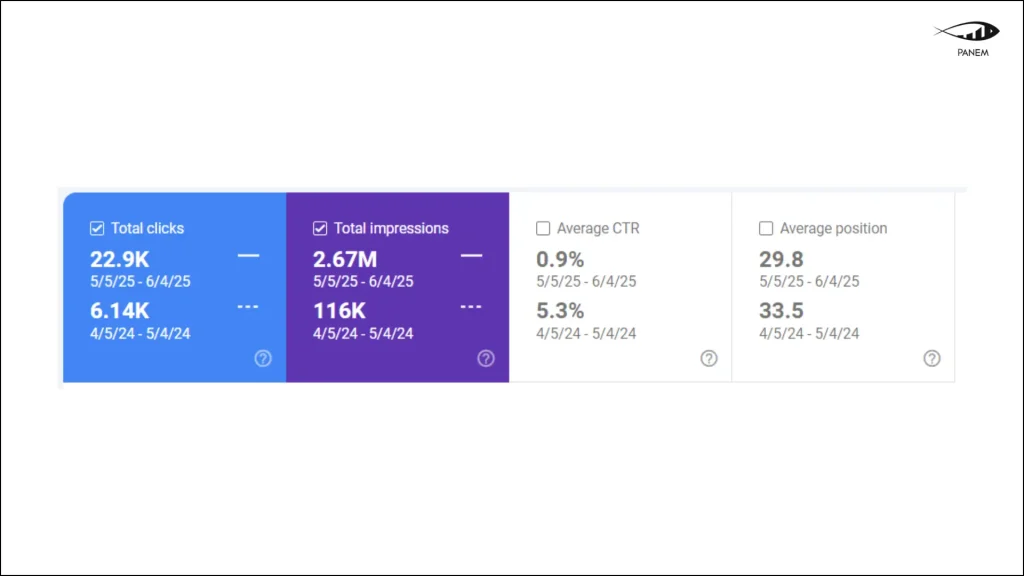
Year-over-Year (31-day comparison):
- Clicks: from 6.14K → 22.9K
- Impressions: from 116K → 2.67M
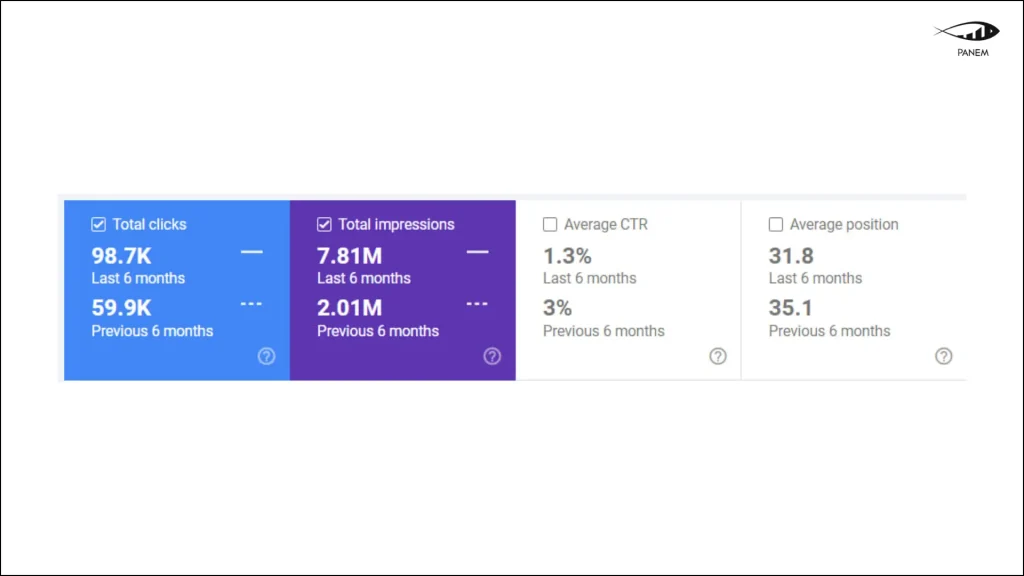
6-Month Growth Comparison
- Clicks: +38.8K increase
- Impressions: +5.8M increase
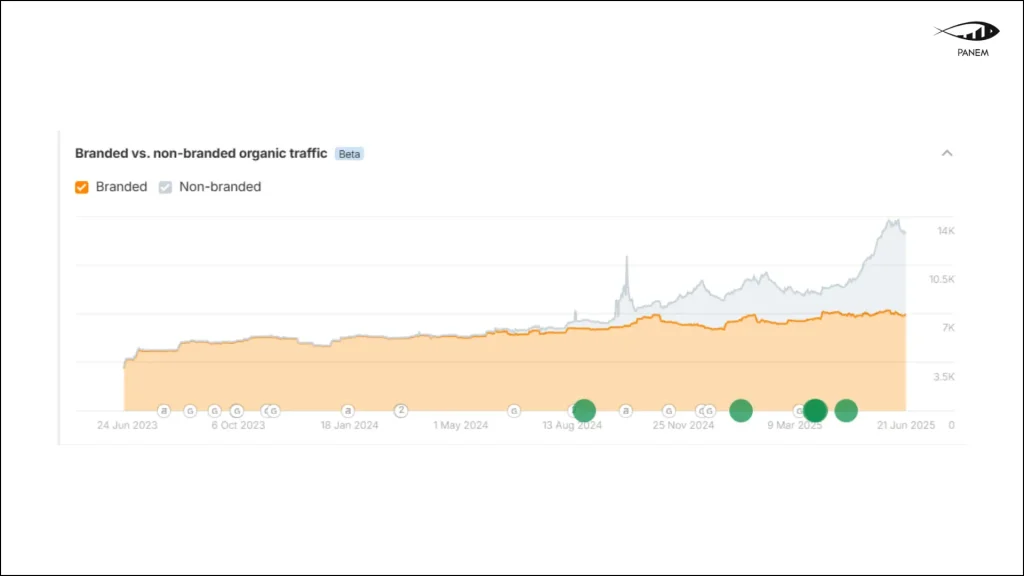
Branded vs Non-Branded Growth
- Non-branded traffic growth significantly outpaced branded — confirming the success of content-focused SEO
Over the course of 12 months, Sembly’s SEO performance transformed:
- Almost 4X monthly organic clicks
- 23X search impressions
- Significant gains in non-branded visibility
- Sustainable growth driven by content, links, and site structure
Next Steps:
- Updating the site design and main page optimization
- Expand programmatic SEO for automation pages
- Further improve CTR (according to new SEO reality with AIOs)
- Launch backlink campaigns on SaaS and AI media
- Integrate conversion-focused content for lead capture
Conclusion
This case demonstrates that even in one of the most competitive AI SaaS niches, sustainable SEO growth is achievable without massive budgets — if the strategy is focused, structured, and aligned with modern search behavior. By combining technical fixes, intent-driven content, and scalable internal linking, Sembly was able to shift from primarily branded traffic to strong non-branded visibility and compete directly with market leaders.
A key success factor was adapting the strategy to the new search landscape — including optimization for AI Overviews and feature-driven queries — which allowed the brand to capture high-visibility placements beyond traditional rankings. This approach not only increased traffic but also improved the quality of incoming users.
Overall, the project proves that SEO in 2025–2026 is no longer just about rankings — it’s about building a discoverable, structured, and AI-friendly content ecosystem that drives both visibility and conversions.

OTHER CASE STUDIES