Initial Data
A SaaS platform for resource management in a multi-project environment. It helps companies plan team workload, forecast risks, and optimize operational processes.
Key Challenges:
Traffic & Leads: At the start of the collaboration, the website showed steady organic traffic growth, but its quality did not align with business goals. A significant share of visits did not convert into leads.
- Decline in organic traffic after the rollout of Google AI Overviews;
- Low volume of high-quality leads from SEO;
- A large amount of outdated and irrelevant content;
- Keyword cannibalization across blog articles.
Goals:
- Increase organic traffic;
- Improve visibility in LLM / AI search;
- Grow conversions and lead volume.
Initial Analysis
Target Audience: The platform targets companies operating in multi-project environments that require efficient resource management. Key audience segments include Project Managers, PMO Managers, CTOs, Heads of Engineering, Operations Managers, and business leaders across IT, engineering, manufacturing, and consulting industries.
Competitors: The main competitors identified during the research include Planview, Kantata, Celoxis, Smartsheet, and Resource Guru. Most of them invest in content marketing, build extensive knowledge hubs, and rank across a wide range of informational queries.
SEO Strategy Focus:
- High-intent keywords and expert-driven content creation;
- Optimization of commercial pages;
- Improving visibility in AI-driven search.
Core Tools:
- Ahrefs, Semrush — semantic research, competitor analysis, backlink profile, and LLM visibility tracking;
- Google Search Console — performance (clicks, impressions, rankings);
- Google Analytics — user behavior analysis;
- Screaming Frog — technical SEO audits;
- Frase — content optimization and SERP analysis.
Promotion Stages
Stage I
- Analysis of direct and adjacent competitors in the niche;
- Evaluation of the platform’s functional capabilities;
- Research of the product’s unique value proposition (USP) and market positioning;
- Analysis of visibility in LLMs (AI Overview, ChatGPT, Gemini);
- Identification and mapping of ключових entities within the project & resource management niche.
The primary focus at this stage was on defining the product’s unique value proposition (USP), refining its market positioning, and identifying the most перспективний напрямок для SEO growth. The analysis revealed that broader coverage of the “project management” topic would be less effective. Instead, stronger results could be achieved by narrowing the focus to a more specialized niche.
This approach allowed for clearer product positioning and enabled the SEO strategy to concentrate on higher-intent queries with stronger commercial potential.
Stage II
At the second stage, the main focus was on content optimization and the creation of high-quality new pages.
- Query Fan-Out Analysis. A Query Fan-Out analysis was conducted to understand how AI systems and search engines expand user queries. Based on this:
- additional keyword clusters were developed;
- content gaps were identified compared to competitors;
- the semantic core for both articles and landing pages was expanded.
This approach enabled the creation of content that better aligns with real user search behavior across both traditional search and LLM-driven environments.
- Commercial Landing Pages (Technical Specifications). Detailed briefs were prepared for the optimization and creation of key pages, including: feature pages, solution pages, industry pages.
- Blog Audit.
3.1. Content Segmentation. The blog was divided into three main categories:
- lead-generating articles;
- general informational content;
- news.
3.2. Optimization of Problematic Content. Priority was given to articles with the following issues:
- duplicate content;
- keyword cannibalization;
- outdated information.
3.3. Removal of Ineffective Content. Low-quality or irrelevant articles were either removed or consolidated with stronger content pieces.
3.4. Optimization of Lead-Generating Content. High-potential articles were updated and optimized, resulting in improved rankings and increased visibility in AI Overviews.
- LLM & AI Overview Optimization. A dedicated focus was placed on optimizing the website for AI-driven search and LLM systems:
- creation of listicle-style articles frequently used by LLMs in responses;
- content optimization specifically for AI Overviews;
- development of content targeting long-tail informational and commercial queries.
This led to increased brand mentions in AI-generated answers and improved overall visibility in LLM ecosystems.
Stage III
- Internal Linking. Recommendations were provided for an internal linking structure that strengthened commercial-intent pages and improved overall page indexation.
- Link Building Strategy. To improve search rankings, a link-building strategy was implemented, combining outreach and crowd marketing campaigns to acquire high-quality backlinks.
SEO Results:
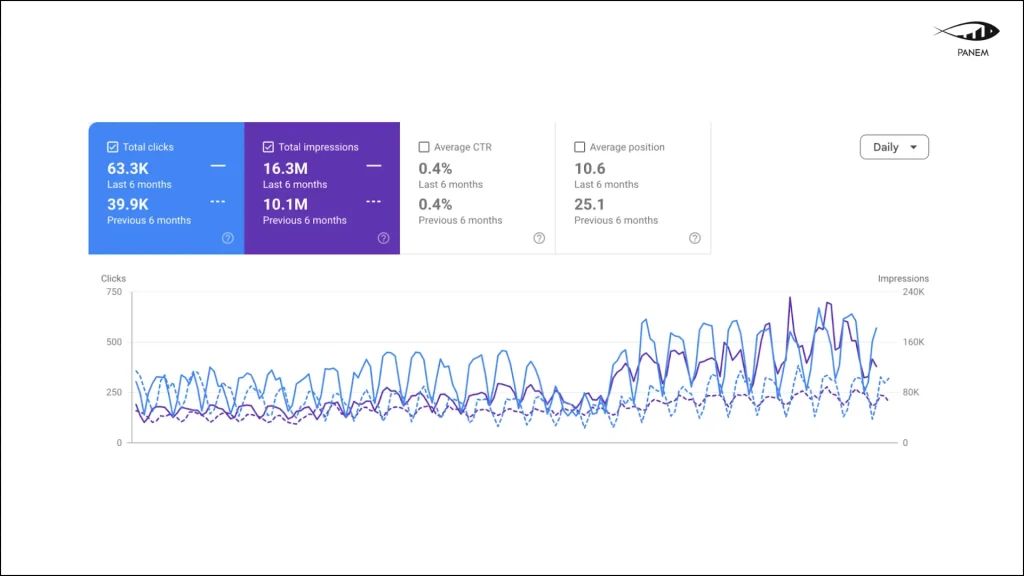
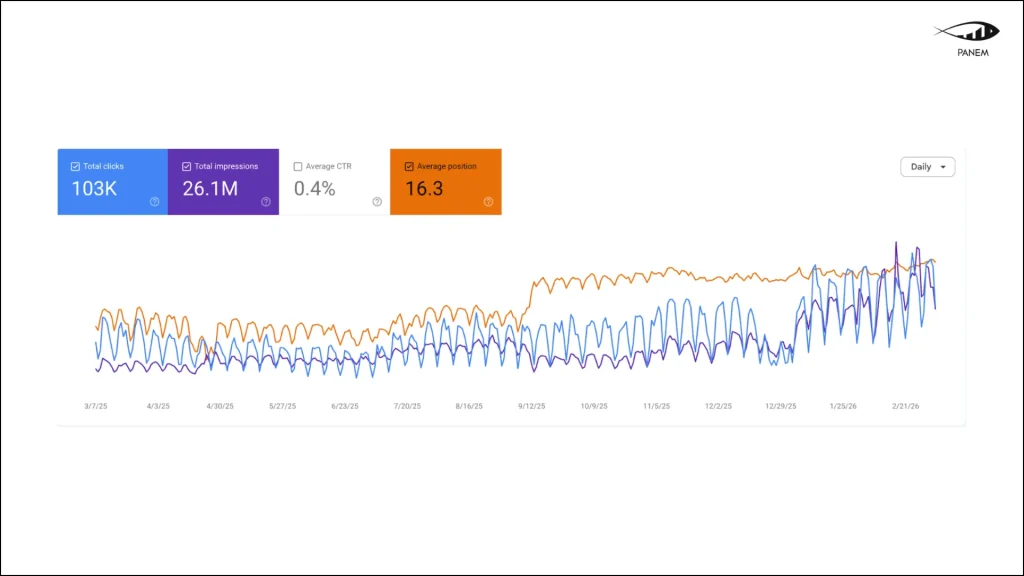
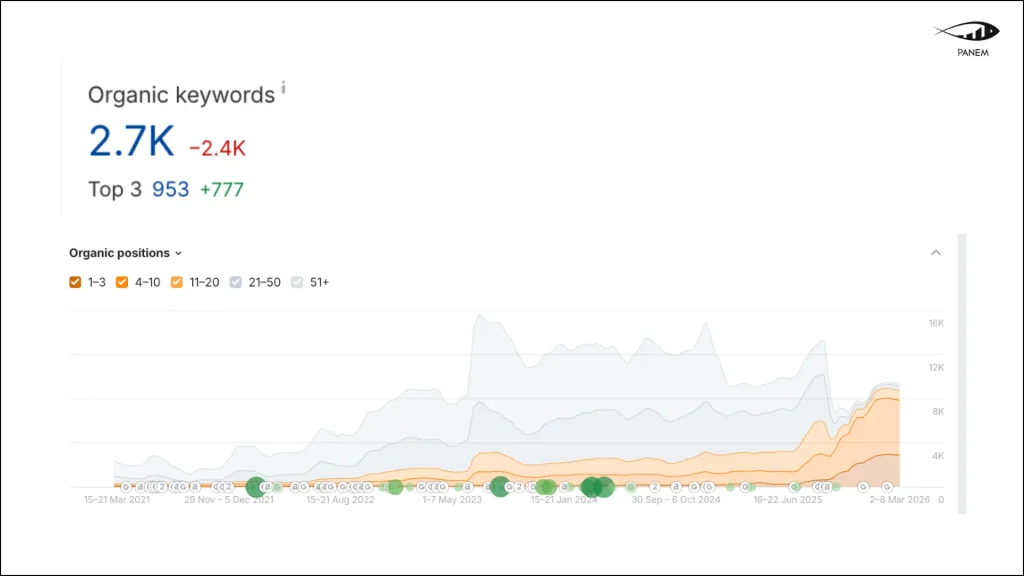
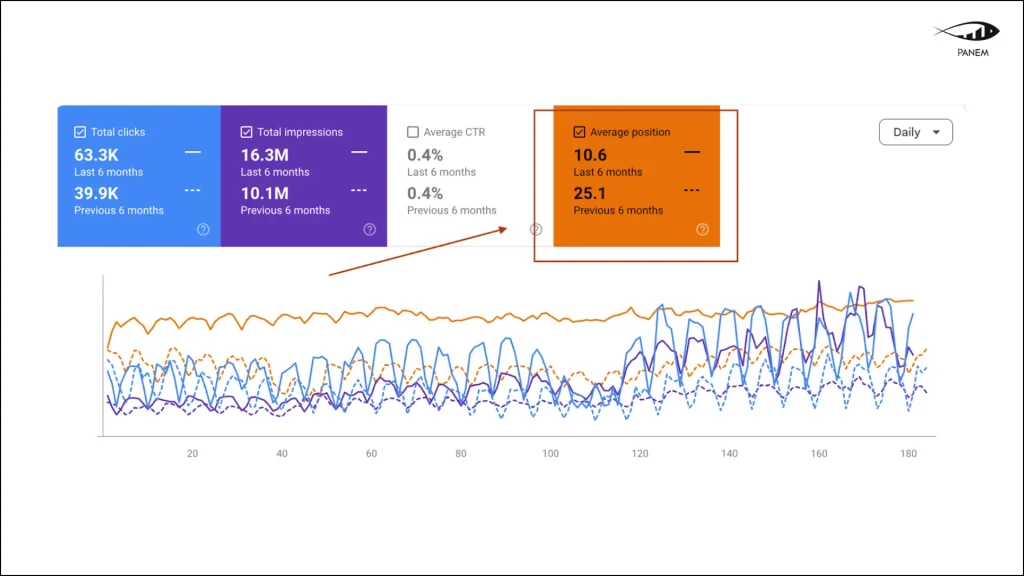
1. Organic Traffic Growth: +60%
(last 6 months vs previous 6 months)
GSC:
Ahrefs:
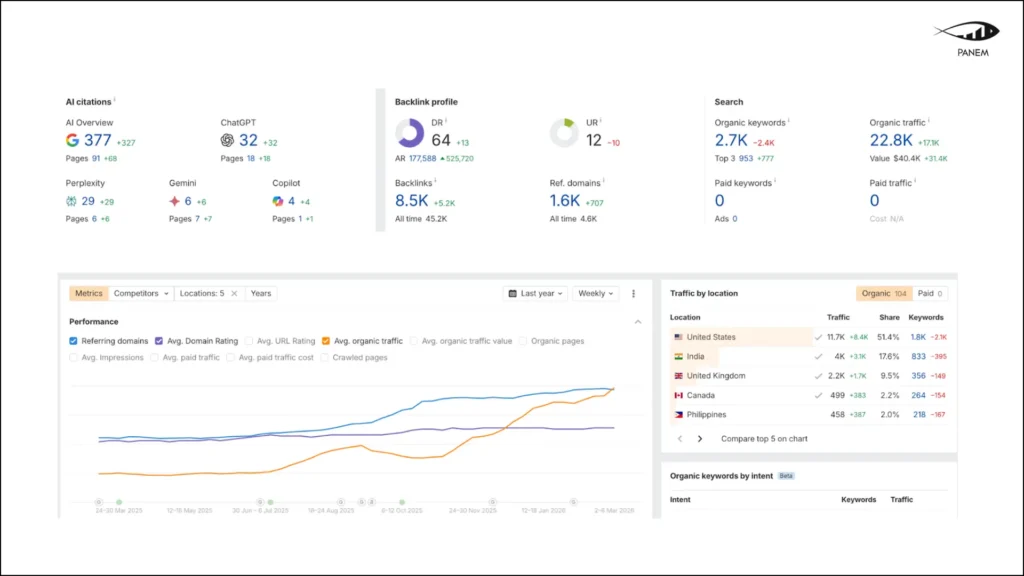
2. 3 Rankings Growth: +777 keywords in Top 3
- 30% of all keywords rank in the Top 3
- 83% of keywords rank in the Top 10
3. Average Position: improved from #25 to Top 10
(last 6 months vs previous period)
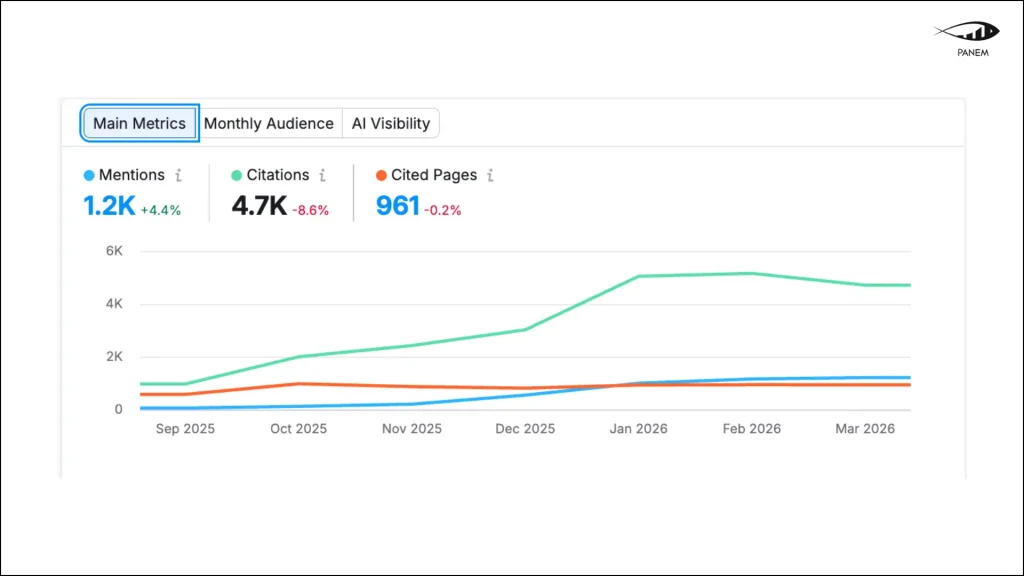
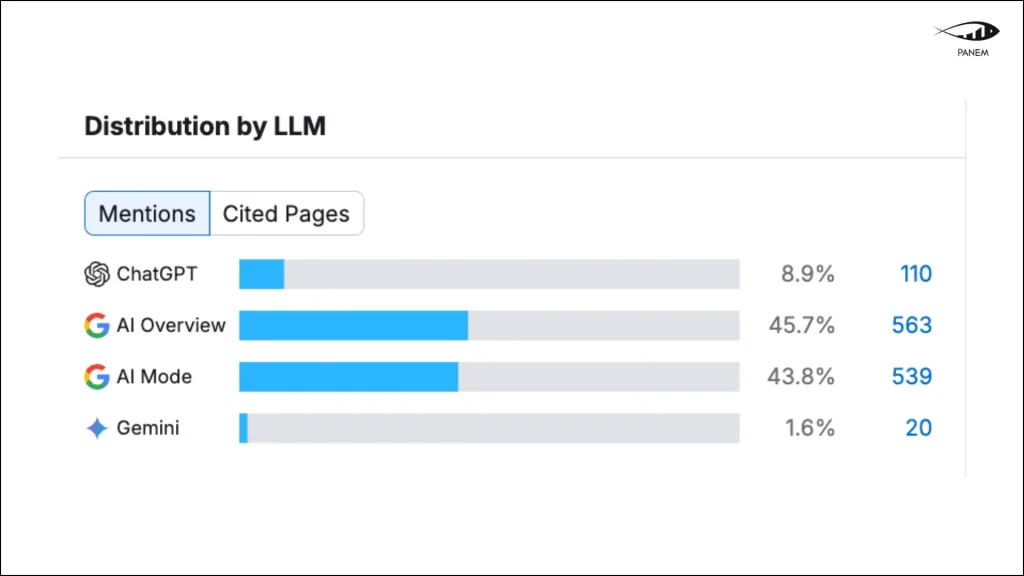
4. LLM Visibility: 1,200 mentions per month
After content optimization, the website started appearing more frequently in AI search results and LLM-generated answers.
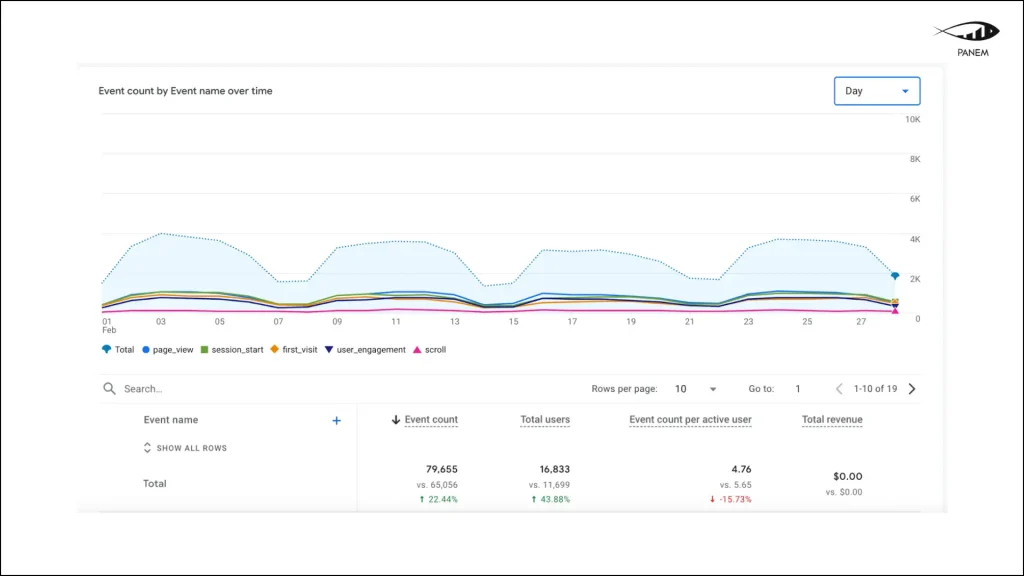
5. Leads & Conversions:
Conversion growth: +22% (last 28 days vs the same period last year)
Conclusions:
The implemented SEO strategy not only ensured steady organic traffic growth but also significantly improved its quality in terms of business impact.
By focusing on high-intent queries, we shifted the traffic structure toward users who are actively evaluating solutions. This allowed us to attract a more relevant audience and directly increase lead volume and conversions.
The highest performance came from commercial pages — particularly feature and industry landing pages — as well as optimized lead-generating blog content. These became key entry points for high-intent users and the main drivers of SEO-driven lead generation.
As a result, SEO evolved from a traffic acquisition channel into a growth engine, generating qualified demand and driving measurable business growth.
Want to get your personalized Promotion Plan? Fill out the form and we will contact you shortly.

OTHER CASE STUDIES